Monday, 3 November 2014

Nature of Photographs

*Nature of Photographs by Stephen Shaw*


Colour changes the atmosphere in the photograph because the eyes are lead differently around the image because the colour catches our eye not the subject, colours can be used to manipulate because different colours have different meanings and people associate them with pre ingrained connotations. The tonality of the colours (or saturation level) can also affect the mood that the photograph emits as a dull (desaturated) image gives off a more negative connotation than a brightly over-saturated one will.

Black and White photographs do not mean that the image is more real, however the connotation of B+W are that the photograph is more artistic and that it is 'real' because of the first images that were able to be made were B+W because of technical limitations.

Context will also affect the way that photographs are read, images seen in newspapers are often dismissed yet if the same photograph appeared on a wall in a gallery there would be a different reception received. Depending on the subject the location of the photograph can be equally important as the photograph.

When people view an image they do not think of what has been omitted; these omissions are just as important, as if they had been included would the entire meaning of the photograph change? Would the atmosphere be different? Have these elements been omitted just so that the photographer can reinforce their own point instead of showing the whole picture/story?


There are two different types of framing: passive and active. A photograph with a passive framing means that the main focus is in the centre of the image and there is negative space or just small background elements against the edge of the framing. An active frame is a photograph that leads the viewers eye outside of the photograph, this could by placing the model on the edge of the photograph.

Tom Sparks
(an example of passive framing)
Darren Rowse
(an example of active framing)

Robert Adams
His works show how that man is affecting the shape and lay of the land.


Thomas Joshua Cooper
emerging / submerging / emerging
The work that he does are beautiful commentaries on the nature that surrounds us


William Eggleston


Stephen Shore


John Davies
he influenced :

The Bechers
"conceptual artists"
taught at Düsseldorf school

these people were taught at the school :

Andreas Gursky

Axel Hutte

Thomas Struth

Monday, 20 October 2014

Mass Communication and Gender


Roland Barthes
spectator theory
 rhetoric of the image
types of messages
- denoted (what is being shown visually)
- connoted (what this makes me think about)
- linguistic (what words are being used)


Stuart Hall
Three different hypothetical codes within images are:
dominant - viewer can agree with what is being shown
negotiated - the viewer understands what is being shown
oppositional - the viewer disagrees with what is being shown, to do this they must first understand it


Gramsci
Why do we use the internet?
There are many purposes for using the technology and social media that we as consumers do; there is information readily available at our hands, connecting on social media sites help us to not feel as alone however the more we use social media the more alone we feel, the entertainment available helps to fulfil our lives with daily humour and removes the feeling of 'doing nothing'


Blumler and Katz
The audience have needs which are fulfilled by the interactions they have with social media websites and tv, watching certain programmes draws friendships closer as they have mutual interests, it also serves an a form of escapism, many people get drawn into the fantasy world and forget their own lives and problems for a short period of time.


Stephen Heath
He proposed that many people enjoy the cinema because it is imitating the dreams that people have and is a form of escapism from real life. He says that people can accept the absurdity in film because the qualities are almost dream-like; sitting comfortably in a dark quiet room watching an unrealistic scene is somewhat permitted because the atmosphere reminds people of laying asleep and dreaming.


Monday, 13 October 2014

Nan Goldin


The Ballad of Sexual Dependency


preserves memories of her friends as many of them are dying
visual diary or her memories of her life and hardships

Nan Goldin referred to the Transvestite community as being a third gender, it is not meant as negative but I feel as though she means that we should celebrate their being different and expressing their true self.

This is a series of portraits that record complexity of life, it is not a decisive portrait but a collection that should be viewed together as they are all related to another

Image as Network


Look up from anti-social network

A short video showing the effects and missed opportunities in life when you become addicted to your mobile phone.


Children are now now being taught in classrooms by using technology, it has replaced kinetic teaching and activities and shown children that they need technology, it can be useful as more information can be accessed however it can also make children lazier because they are not being active.
Young adults are early adopters of new technology, they will latch onto the latest trends and want to be able to access them from any location, more and more colleges and universities are adapting their methods and available technology because students are taking new technology into universities with them and not being able to use them because the facilities are not yet available.
The current and future students will continue to bring change to institutions as growing up surrounded by technology means that using it comes naturally to many and that we have self taught ourselves how to understand it.

How Safe is the Internet?
Do we really know what is happening online? No we don't, that doesnt mean we should not use it though, it means we should be protective of our data and information that we share over social media websites. There are many fun outlets available online that are not dangerous; for instance educational videos on YouTube, iTunes is a large collection of music and eBooks that are available to download, many of which are useful and educational. Computer gaming can also help to teach children as they do not feel as though they are being taught as it is within a game.


Digital Native:
grew up surrounded by technology
not afraid of it
can adapt to new technology without aid

Digital Immigrant:
grew up before technology was so integrated with society
have to be taught about technology
afraid of the new and changing society


kids have a passion for learning
let them teach themselves

Sugata Mitra

"granny cloud" is the term used for the project in which retired or ex teachers can connect online with students who do not have many facilities in their school and help them to learn. This can involve teaching students in another country learn and become active as the technology would be new to them and they would be interested.
https://grannycloud.wordpress.com/


"hole in the wall" experiments - 6-13year olds teaching themselves to use a computer without any interaction. Set up looking like a cash machine, a screen and a trackpad are all that are offered out of a wall in a remote village where nobody had used technology before, one child notices the new device and begins to experiment with it, it then gains more popularity as activities are being found that they can use on the computer.


Ken Robinson
He thinks that technology is key to unlocking the classroom. This could be true as more and more children are getting access to technology


Access:

Is technology a curse or a blessing ?
What? where? what do I do with it?
What happens if I am denied access?
How reliant am I on technology?

Communication skills
Some young children are struggling to learn to communicate with other people as they are using technology which will do it for them. They do not need to learn to communicate if they have a device which will do this instead, this means young children are becoming lazy not just in exercise and playing but in learning speech.

Monday, 6 October 2014

State of Fashion


Richard Avedon
"In the American West"
This series focuses on the middle class citizens, he creates evenness throughout the series by photographing them in the same style and all with a white background, he removes information about them by not revealing their location.

Steven Meisel
Working for Italian Vogue he can "demonstrate the genre's capacity to reference, shift, and reinvent" fashion photography.

Nick Knight
"created the first exploration into the possibilities of fashion on the Web," by launching a website (SHOWstudio.com) that hosts all of the latest news about fashion and the latest "fashion films" which are released by companies as promotional films, some films were created by the photographers assistants which featured the models between shots but other films were directed and shot by hired film makers.

(above quotes taken from the article "State of Fashion" by Charlotte Cotton)

Bill Brandt
He is an influential photographer who documents the life of the working classes. He brings the subjects personality to the forefront of the photograph, showing them in a natural setting, adding more information to the photograph by placing them in a setting.

David Bailey
portraits in square format
simple set up
full frames
represents who the person is
different camera angles / heights
buys cheap props - makes sure they represent the person ( not the cheapness - the prop)
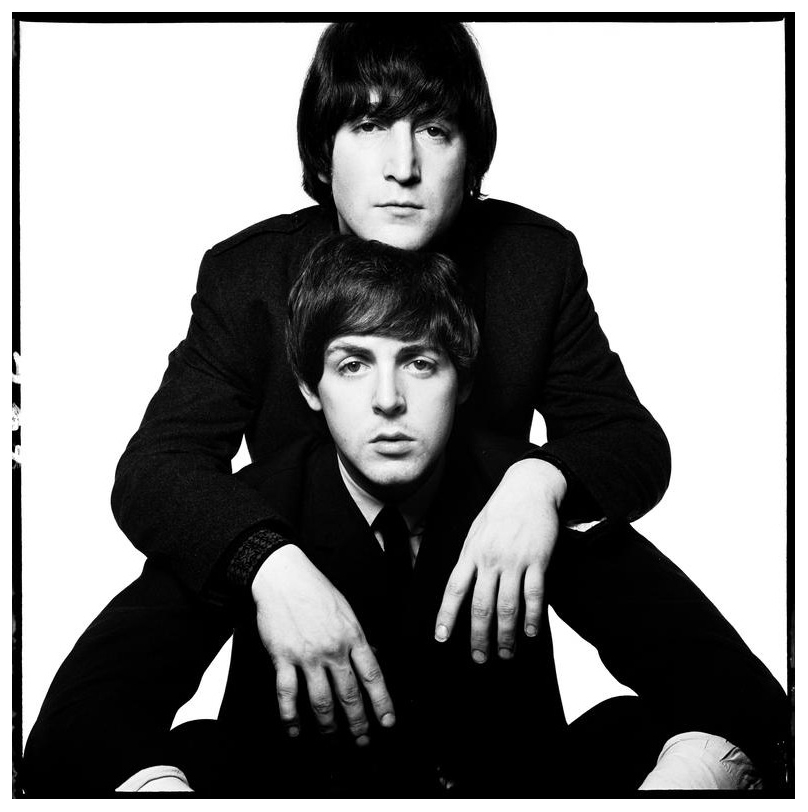
He photographs pairs or groups - how are they represented? together or separate?


The Kray Twins
The Beatles
These two images were both taken by David Bailey however the subjects have been represented in two very different ways, this has been done through the composition, lighting and other technical elements. The composition of the two photographs changes because of who the models are: the Kray twins were a notorious pair who ran one of London's organized crime gang, the stance that they have shows the authority that they command because the camera angle is slightly lower than their faces which means that we as viewers 'look up to them' they also fill the frame with their faces and the harsh shadow down one side creates a dark foreboding atmosphere. However in the photograph of two of the Beatles the position they are in is a close intimate one resembling friendship, the camera angle in this image places the viewer in their level, which connotes that the viewer is on the same level as them and they are not trying to be elevated. The lighting is full frontal which gives a positive look as they are not hiding in the shadows but are out in the open to be seen.


British New Wave


Useful Information:
british cinema book
intro to film studies (french wave)
best of british
films and national identity (swinging 60's)
Susan Sontag 'on photography'


Realism:

Is realism 'real' or is it all a set up made to appear 'realistic', I feel that it is only 'realistic' as many times in films and art it is a glamorized version of real life, it does not show the brutality or horrors that are in life but shows the positives which people want to be reminded of, 'real life' does not choose to be glamorized and does not hide its negative features.


Challenges to realism:

Americanisation - Hollywood and the creation of the 'Star System' where actors were idolized and became celebrities, they were used to draw the audience in and allow the audience to connect more with the scenes within the movies.

Commercialisation - Which led to the decline of traditional values.

Anxieties - The current youth was all 'post war babies' which meant they were worried about another war happening yet they were celebrating the end of the war and freedom of life.
                     cold war / Hbomb / spies / communists are a few things that the people were afraid of
                     The youth would grow into the peace movement in 60's because they were reacting to the horrific events they had lived through and did not want to witness again.


Social problem films
(kitchen sink dramas)
Having lived through the war the youth were not watching escapism films, but were interested in the realism films that showed how life could be for them, even if it was a glamorized version of life.

'Look back in anger'
filmed in natural recognisable locations that the audience could easily associate with.
The audience were able to identify with characters as unknown people were cast as actors, this meant that without the celebrity status the audience connected to the characters.


New wave:

almost punk like, rebelling, stereotypical 'angry young man'

1950's
birth of the generation gap, before this children stayed children until they were expected to grow up and become adults, there was no middle ground where the children explored different avenues
youth culture - music / fashion, these became more readily available and luxurious after the war, there was a target audience for teenagers as they changed their style into their own
teenagers were 18/19/early 20's years old instead of the younger teens that are becoming teenager in this society
TV - teens went to cinemas instead of sitting with the family to watch TV


New Wavers
underage sex - pill has just come out
adultery - mixed race r'ships, homosexuality
change from lower to higher classes (look back in anger)


John hill 'sex class and realism'
book


Documentary Movement


  • grainy
  • handheld
  • Black and White


John Grierson
documentary is creative / poetic / beautiful / real

woodfall studio - new wave studio

Alan Lovell
criticised movement:
" how can you be creative if you have to be real? "
" does having an education affect your ability to be a director? "

French New Wave
revolution of cinema / anti hollywood

Italian New Wave
neo realist

Monday, 29 September 2014

City of the 21st Century


Diego Velazquez - Las Meninas

In this painting the artist has chosen to include himself in the painting as it is a viewpoint from the clients eyes, it is a staged scene that shows a wealthy family's children playing while the maids watch over them, we have been given the viewpoint of the monarch who this painting was commissioned by, we can only see them in the mirror in the background, this was a new viewpoint in photography that was not common before as artists would be showing the subjects straight on so that they could see their wealth and status portrayed.


Manet - A Bar at the Folies-Bergère

This painting was new in style as it had not been commissioned for a wealthy client to show their wealth, but it shows daily life of a woman working behind the bar. In this painting the background is a mirror reflection of the bar behind the woman so that more of the bar can be seen, the painter has chosen to angle the reflection so that we would not be seeing himself however can see the customers in the bar.


Jeff Wall


  • exhibits in light boxes
  • large format camera
  • hybrid of staged and straight (intended to look straight)
  • influenced by art and films
These photographs have been taken by Jeff Wall who creates beauty within the commonplace urban life events.

Picture for Women

This is a picture that Jeff Wall took showing himself and the model in the mirror, including himself mean that there is added context within the photograph because we can see the setup and the studio surrounding, it is an inner glimpse at how the photographer works.

Tattoos and shadows

This photograph shows people in the garden and is heavily influenced by Monet "women in garden" (shown beside), many people spend summers in their gardens and as such it is not seen as a wonderful thing but this shows the contrast between the pattern in the tattoo's and the one caused by the shadow. The inspiration for this clip was a real life scene which Jeff Wall had seen and wanted to recreate.
http://www.sfmoma.org/explore/multimedia/audio/30


Eviction Struggle

In this photograph we can see a family that are being evicted, one member of the family has to be escorted away from the house with another member behind trying to protest this. The story is a modern life event which many people can relate too. I think that Jeff Wall is trying to make a point about the unfairness of the situation as the camera angle makes the viewers look down upon the situation, the distance from the scene also connotes that the viewer would not step into help but watch from a safe vantage point.

The storyteller
constructed / comment on technology integrating with society and old traditions struggling to remain
This photograph is making a point about the way that technology is advancing and becoming integrated with society and that the old traditions of storytelling are struggling to remain and have been demoted and are getting overlooked.
The old prison

This is a panorama of the city showing the differences between the old abandoned prison and the possibility of the new coming into fruition (seen by the JCB behind the lamppost).

Outburst

This picture is making a comment about the state of life that some people live in, working in a sweat shop they have long hours with very little pay in return and their boss still shouts at them for any and all mistakes. The boss is shown in a very threatening aggressive manner towering over the employee.


A sudden gust of wind

This photo-montage took over a year to complete to make a seamless effect, it is directly influenced by the Japanese woodblock printer Hokusai. The effect of this shows us it people that are changing and not nature as the wind is still affecting the people inside the frame.


Tom Hunter

  • tutored by paul kennard
  • Thoughts of Love and death (project)
  • inf by preRaphaelites
Millais - the vale of rest
The Vale of Rest

This image is showing the outcast community and is a modern retake on the historical painting 'The Vale of Rest' by Millais.

The Way Home
inf by Ophelia
Influenced by the painting 'Ophelia' this story is a representation of a young woman that Tom Hunter heard had died in a canal, This modern version of 'Ophelia' is a staged version of reality.


What's the difference between straight and staged?

'Straight documentary' are photographs that have been taken where the photographer has not interfered with the subject in any way and it is exactly how it happened while the photographer was there. This means that the photographer has to visualise the exact scene in the few milliseconds before taking the photograph.

'Staged documentary' means that the photograph is a set up scene that the photographer has carefully chosen to show in the way they have, this means that they can omit certain elements or bring the focus to one point which they want to highlight more easily. It is certainly more easy to be able to set up the scene because with more time the scene can be rearranged and explored.

Staged photographs are often set to appear Straight and at first look they do not appear Staged, in Tom Hunters and Jeff Walls work their photographs are Staged to be Straight.